
Winter tire requirements now effect across B.C.
(Image Credit: ID 125537311 © Natallia Khlapushyna | Dreamstime.com)
A reminder that winter tires or carry chains are now required on British Columbian roads as of today (Oct. 1).
Depending on the route, these requirements remain in effect until March 21 or April 30. The requirements for roads in the Southern Interior Region are outlined below.
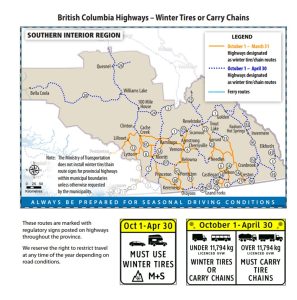
Winter tire requirements in the Southern Interior Region. (Image Credit: The British Columbia Government)
On designated routes, passenger vehicles and light trucks must use winter-rated tires displaying either the M+S marking or the three-peaked mountain and snowflake symbol.
“Winter tires aren’t just for snow,” says Trace Acres, Program Director, Road Safety at Work.
“They give you more grip and control when temperatures drop below 7C, which can happen long before the first snowfall.”
Road Safety at Work recommends winter tires bearing the three-peaked mountain and snowflake symbol. Designed to remain flexible in cold temperatures, they provide better grip when braking and cornering on cold, wet, snowy, or icy roads.
In poor conditions, these tires can shorten stopping distances by up to 33 percent compared with other tires.
Tires marked M+S (mud and snow) also meet the minimum legal requirement, but they are intended for milder conditions such as rain, slush, or quickly melting snow. Below 7C, they can lose grip and traction.
B.C.’s winter tire law remains in effect through March 31 on many highways and through April 30 on routes through mountain passes or high-snowfall areas.
For more information on choosing and inspecting winter tires, along with winter driving tips, visit RoadSafetyAtWork.ca/Winter.
To learn more about B.C.’s legal requirements for winter tires, click here.

Comments